How Do You Know If a Tree Is Dangerous? Sydney Tree Cutting Guide
Trees can add shade, privacy and character to a Sydney property, but a damaged or unstable tree can also create serious problems. Strong winds, storms, disease, poor growth and structural defects can all affect a tree’s stability.
So, how do you know if a tree is dangerous? While some warning signs are easy to see, others may require a professional assessment. Knowing what to look for can help Sydney homeowners identify potential problems before they become more difficult to manage.
What Are the Main Signs of a Dangerous Tree?
Several visible changes can indicate that a tree needs closer attention.
1. Are There Dead or Broken Branches?
Dead, cracked or broken branches can become unstable, particularly during strong winds. Large dead limbs hanging over a roof, driveway, pathway or outdoor living area deserve prompt attention.
Professional pruning can sometimes remove hazardous branches without requiring the entire tree to be removed.
2. Is the Tree Leaning Suddenly?
A natural lean does not automatically mean a tree is dangerous. However, a new or increasing lean can indicate a structural or root problem.
Look for changes in the soil around the base, exposed roots or signs that the ground has shifted. A professional assessment can help determine whether the tree remains stable.
3. Can You See Cracks or Cavities in the Trunk?
Large cracks, cavities, split sections or damaged bark can indicate structural problems. These issues may be particularly concerning when they occur on major limbs or around the main trunk.
A tree can sometimes look healthy externally while still having internal defects, which is one reason professional tree assessments can be useful.
4. Are the Roots Damaged?
Roots play an important role in keeping a tree stable. Construction work, soil disturbance, erosion, disease and other factors can affect the root system.
Signs such as exposed roots, soil lifting around the base or visible root decay should not be ignored, especially if the tree is close to a home, fence or other structure.
5. Has the Tree Been Damaged by a Storm?
Sydney storms and strong winds can break branches, split trunks and destabilise trees. A tree that appears to have survived a storm may still have hidden structural damage.
After significant storm damage, it is sensible to have the tree assessed before attempting to cut large branches yourself.
When Does a Dangerous Tree Need to Be Removed?
Not every hazardous-looking tree needs complete removal. In some cases, pruning or branch reduction may address the problem. In other situations, removal may be considered when a tree is dead, severely damaged, diseased, structurally unstable or positioned where a failure could cause significant damage.
Green Arbor Professionals notes that tree removal may be appropriate for trees affected by structural damage, disease, storm damage, dead branches or other safety concerns.
The appropriate solution depends on the tree’s condition, size, location and surrounding environment.
Should You Cut a Dangerous Tree Yourself?
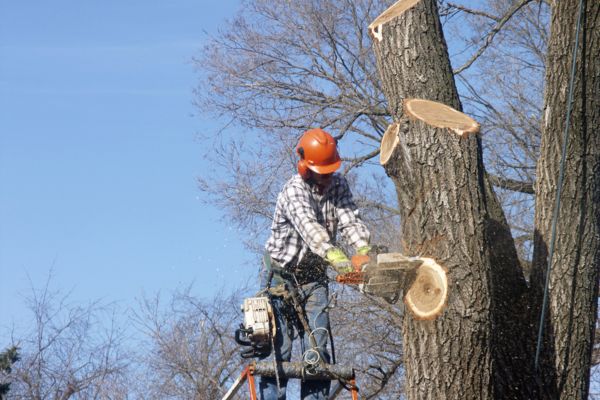
Large-tree cutting can be hazardous without suitable equipment, training and experience. Branches can move unexpectedly, fall in different directions or damage nearby structures.
Trees growing near houses, fences, vehicles, roads or power infrastructure can present additional challenges. Professional tree-cutting teams can assess the site and plan how branches or sections of the tree should be removed safely.
Green Arbor Professionals’ Sydney tree-cutting service covers tree removal, branch cutting, pruning and large or dangerous tree work, using specialised equipment where required.
What Should You Do If You Think a Tree Is Dangerous?
If you notice significant cracks, dead branches, storm damage, root problems or an unusual change in the tree’s position, avoid working on the tree yourself until it has been assessed.
For homeowners looking for tree cutting Sydney services, a professional assessment can help determine whether pruning, branch removal or complete tree removal is appropriate.
With the right approach, Green Arbor Professionals can help Sydney property owners address hazardous or overgrown trees while considering nearby buildings, gardens and other structures.